Showing posts with label language. Show all posts

Saturday, June 12, 2021

Glossary

Glossary:

USA or US for the United States of America

 service or servant leadership for other people

peak or pique 
Is it peak or pique your interest?

The traditional idiom is to pique one's interest, with pique meaning “to provoke or arouse.” Like perk, however, peaked can also make sense in context. Peak means “to bring to a maximum value or intensity,” and this is certainly what one might mean when saying, “my interest was peaked.”

profession is an occupation that involves specialised training and a formal qualification before one is allowed to practice or work. In other occupations this isn't the case. In many cases, for example, people learn on the job, watching somebody else gradually being shown what to do, and we would call this sort of approach a craft. When we talk about the body of people who make up the profession, or the occupation, we often give it a label: the legal profession, the medical profession, the engineering profession and so forth. Professions and members of professions often have significant responsibility, for other people and resources.

How are you? I'm fine. Doing good! Great! Never better! Not bad! Simply peachy! Out of this world! Unbelievably well! Can't complain. 

Hi Mary, or Hi Mr. Smith to Dear Mr. Smith, Dear Ms. Smith, Dear Sir or Madam 

Bye or Take care or Goodbye to Sincerely or Yours sincerely

So, thank you very much indeed, for agreeing to do the whole course, but for allowing us to have these kind of conversations.
Sure, you're welcome. It's been a pleasure.

 "How long have you been in practice?"

you will be assessing their essays at a later date
COIK. clear only if known  写的只有知道此事的人看得懂 写的只有知道此事的人看得懂

remediation  補救   補課 補習
preferential treatment  优惠待遇
favoritism 
Speak off the cuff 脫口而出

Prior to having mobile phones, everyone depended on landlines
The impact of America’s Great Depression in the 1930s greatly affected businesses and families.

atomistic and somehow inchoate 初期的 or incoherent understanding.

regionalism. In Australia, they say trolley, and in the United States, we say cart. 
In England, they say biscuit, and in the United States, we say cracker. Crisps instead of potato chips.

socio-cultural context and cue's. 

Heady stuff  头痛的事情

Do you know how or when it is appropriate to cut someone off?

Cogent 令人信服的 response to a task

Requests for clarification and elaboration (to request clarification or elaboration) , waiting to respond and taking mental notes, focusing your attention through repeat viewings, watching online talks or television shows, and using Cornell notes. Suspending or holding off on interrupting is sometimes a useful language learning strategy.

  • please hold all questions until the end
  • What do you mean by that
  • I would love to know more about that
  • excuse me I didn't understand what you meant there
  • you say that again
we look forward to seeing you again very soon.

there's often a storm just underneath the surface.
My very elderly mother just sat upon new paint. (Mercury, Venus,Earth, Mars, just,Uranus, Neptune, Pluto)
insufferable.难以忍受


Multiple Meanings and confused words

detractors 诋毁者;批评者 vs. distractors 分心物.

Say the words out loud and pay attention to the word stress, because word stress can change that word's meaning. For example, produce is a verb, which means make. But produce refers to things that are grown by farming.  [accent]

Sound Volume vs. solid volume
volume. Most often when you say volume, children in primary school might think it refers to the sound in a Walkman


Current:  中国学生做不出来是current 不明白的用法。Answer: A
flow,stream,undercurrent,tide,flux  电流;趋势;水流;气流
adj.present,existing,in progress,recent,up-to-date 现在的;现行的;通用的;现在有效的
current situation.   currency 货币


Schools 學校  

Tuition 学费  

Living expense  生活费

Non-service scholarship: Fellowship 助学金, Scholarship, Tuition & Fee Waiver

Service Assistantship: 付出劳动  10-12 hours/per week Teaching Assistant TA 助教, Research Assistant RA 助研

Loan 貸款

Need-based; Merit-based;

Need-blind 录取时不考虑学生是否需要资助,按学生情况做出资助

Community colleges offer associates degrees, whereas universities offer bachelors, masters and doctoral degrees.

The U.S. Department of State, Bureau of Educational and Cultural Affairs (ECA)

TESOL: Teaching English to Speakers of Other Languages

AA or AAS, which is associate of arts or associates of applied science. These are two year degrees from community colleges and technical schools. B.A. or B.S., Bachelor of Arts or Bachelor of Science. These are typically four year degrees from a college or a university. M.A. or M.S., Master of Arts or Master of Science. These are graduate level degrees from a university. M.B.A., Master of Business Administration. This is a graduate degree in business from a university. And five is PhD. A doctorate degree is the highest level degree from a university.

Dean's List awards go to students who received very high grades at the end of the academic year.


Study 學習

That stage-fright feeling is called the affective filter,

Monitor, monitoring refers to correction of your own speech for accuracy and pronunciation, grammar, vocabulary, and appropriateness. A learner who pays attention to both form and meaning is often the best language learner.

non-native English speakers

modeled examples  示范

can be nerve-wracking

whiteboard: a white plastic board in a classroom that a teacher writes on with ink that can be washed off  白黑板

widely held assumption

content and language integrated learning. Referred to as CLIL. 

CALL (Computer-Assisted Language Learning) 

extracurricular, meaning more than (extra) the curriculum (academics). 


Others

Appeal means to be very interesting or attractive.
1. 上诉;申诉a formal request to a court or to sb in authority for a judgement or a decision to be changed
2. 吸引力;感染力;魅力a quality that makes sb/sth attractive or interesting

an informed media literate consumer.

captions: the descriptions under each of the pictures. vs. subtitle  字幕
red tape 〈贬〉繁文缛节;原指扎文件的红带 , bureaucracy.

a core value, a core belie, fundamental principles

A commercial (电台或电视播放的)广告 is an advertisement played on the radio or television.

A jingle 短曲 is a short song used in advertising to discuss a product or company.

facade: a false appearance or way of behaving that hides what someone or something is really like

French fries:  fried potatoes  炸薯条. but French is the style, the cut. Very thin is called French style, that's why Americans call them French fries.

equality, equity

Homogenous, Homogenous  (two pronunciation ) 

home country

spin: Commonly associated with political public relations,  spin can be characterized as presenting an issue in a perspective most favorable to a given point of view

Credential stuffing is a type of cyberattack in which stolen account credentials, typically consisting of lists of usernames and/or email addresses and the corresponding passwords, are used to gain unauthorized access to user accounts through large-scale automated login requests directed against a web application.

user(s) – n. a person or thing that uses something  

Information that spreads very quickly through social media is called viral.

LOL: laughing out loud

SMH  shaking my head.

YOLO: you only live once  (less popular)

FOMO: fear of missing out (more popular)

Since advertising fees are pegged to audience size 价格等固定于某水平(或与…挂钩)

We noticed an excessive hike in the price of smartphone plans. (价格、花费等的)大幅度提高

Am I in the right place?

prime the pump.

“present by staying in the present?: When you present content, be sure to do so in a lively, engaging manner that draws students in and motivates them to learn more.

extemporaneous or impromptu speech 脱口而出的


Haiku

Haiku: The first line has five syllables. The second line has seven syllables. And the third line is like the first, it has five syllables. Let's read two haiku that use gerunds as adjectives. 

The hound chased the fox, breathing, flexing, and baring his teeth to his prey. 

The boy saw the girl smiling, staring, and batting her eyes just for him.

Phones 

Hello, who is this?  [First, there is an introduction.]

>> It's Justin Timberlake. 
Justin, nice to hear from you again. What can I do for you [Second, a request for information]
>> I just wanted to hear your voice. 

Justin, that is very nice. Is there anything else?
>> Yes, I need to know your birthday. I would like to give you a gift. 

Justin, that is so sweet of you. My birthday is the 20th of December. [Third, a display of information.]

>> I hope you like flowers. 
I sure do. See you at your next concert. [And fourth, closing remarks.]

>> I will have tickets for you, like always.


Books

The Art and Teaching of Language by Francois Gouin, considered a predecessor of Charles Berlitz, who revolutionized language learning in his day.

Job & Business Glossary

A prospective employer will want to know about your transferable skills, qualifications, past work experiences, and goals.

resumes or CVs (curriculum vitae) 简历;(大学教师求职用的)工作履历

I just completed my master degree in chemistry

practical, action-orientated knowledge

Dear Ms. Smith, I was very interested to read your advertisement for the position of receptionist in the Seattle Herald dated May 6th 2011. I would like to be considered for this job.

Hi Mary, or Hi Mr. Smith to Dear Mr. Smith, Dear Ms. Smith, Dear Sir or Madam 

Bye or Take care or Goodbye to Sincerely or Yours sincerely

 "How long have you been in practice?"

Books

"What Color Is Your Parachute?" The book offers helpful information on how to figure out the skills you have. These skills will lead you to the job you want.

Job U: How to Find Wealth and Success by Developing the Skills Companies Actually Need by Nicholas Wyman

Qualifications or Requirements 
Qualified means having the minimum requirements to do a job, a university degree, a license or a certification 

clerical means relating to working in an office.
low-skilled jobs

Job

  • An occupation is a person's work as a way to earn money.
  • career is an occupation or a profession that requires special training and continues over a long period of time.
  • Employment is a general term for the activity that people do to make money.

  • To apply for a job is to formally ask for employment, usually in writing.
This means completing a specific job application or sending a documents like a resume and cover letter. We will talk more about these later in units two and three.
  • To interview for a job is to answer question in a formal meeting.
  • To be hired for a job, is to be given a job and then paid for the work.
  • To work is to do an activity related to one's occupation.

  • A job seeker is someone who is looking for a job.
  • After a person applies for a job they become a candidate or an applicant which is a person who might get the job.
  • An employer is the person making the decision to give the applicant a job.
  • When a candidate is hired and begins working, he is then called an employee. Employee is a more formal word for worker.


People
job seekers
co-workers
mutual friends, or acquaintances
The employer is called the interviewer and is the person asking the questions.
The job seeker is called the interviewee

Small talks

how are you? 
How's your family doing? 
Did your youngest start school yet?
how was your weekend? 
Did you do anything fun or interesting?
What restaurants would you recommend for lunch?
If the weather forecast looks very nice for this coming weekend. Do you have any plans? O

Elevator speech
An elevator speech is a two-minute description of your skills and career goals. 


Network Phrases
networking is about building professional relationships and can help you to learn about jobs that are not advertised online or in newspapers.
Networking is not a quick turnaround strategy. 
professional network.


Phrases
working around a difficulty
Job openings and career goals. 

high turnover rates mean workers often move from job to job.
finishing touches 
proofreading 
make a great first impression.


you’re the best fit.  (a great fit)
you're not tongue tied 

appropriate phrases
direct and demanding
people are not very responsive
If you sound demanding or if your tone is “off” in some way, this will be a serious deterrent.


internships and co-ops. Co-op is short for Cooperative Education and is an academic program meant to complement the student's education, according to the Cooperative Education & Internship Association. 

Internships are often short-term positions with a company or organization while a co-op is meant to be longer term. They both let students test their knowledge and abilities in the real world and help them consider if the work or company is a good fit for them.
  
we're going to look at some more do's and don'ts of an interview.

Well where do you see yourself in three years? >> What's that? >> In the future, where do you see yourself in three years?

 
many of us change jobs and careers throughout our working lives.

Please remember the importance of preparing an up to date professional looking resume and cover letter. Making a good first impression with an employer is vital.

early adopter
Beef up your Facebook profile by adding work history, interests and skills.
    
Is it clear, engaging, humorous, appropriate or at least grammatically correct?


Business
collateral  抵押物
market research, survey design, and how to evaluate results.
  • feature is a noticeable or important part.
  • function is how something works.

Let’s take shoes as an example, the size of the shoe and the amount of foot or leg that the shoe covers are example of features. Functions would be to protect the bottom of the foot, or keep it warm.


the grocery store, the market, the farm stand
different demographic profiles. niches markete, past and current experience, and future needs.

Wednesday, June 2, 2021

Bringing the Communicative Approach to a Predominantly Grammar Translation System

Bringing the Communicative Approach to a Predominantly Grammar Translation System

by Jessica Cinco

For years, the majority of Chinese schools have taught English using a combination of the Grammar Translation Approach and the Reading Approach.  English courses are teacher- and textbook-centered, focusing primarily on learning specific grammar, reading and writing.  Lessons are geared towards passing government-created standardized English tests.  Classes often have well over 50 students, who may never even visit any English speaking country (Anderson, 1993).  This reminds me of the painful stories my parents told me of their childhood Latin classes in the 1950’s, made up of strict teachers, boring material and copious amounts of memorization to pass standardized tests.  As both a language teacher AND student myself, I cringe to think about either teaching in this manner or having to sit in class and endure this means of instruction.  It just isn’t practical….or fun.  I’ve seen the effects of this style of education, when students who’ve been taught English in this manner, whether from China or other countries, are placed in my English classes at ASU.  They are withdrawn and often resent being in class.  My goal is, and always will be, to bring life back into these burned-out language learners.  


This past summer, I participated in the Jiangsu Teacher Training Program, in the Jiangsu Province of China, located just outside of Shanghai.  The Jiangsu Provincial Department of Education has been striving to revolutionize their English education program in public schools since 2004 (JESIE Program, 2016).  Every summer, native-speaking English teachers journey to the Jiangsu Province to help the government conduct a ten-day English teacher training program for its public school English teachers. This program brings together two amazing groups of teachers:  the Chinese teachers who struggle to prepare massive classes of students who don’t want or care to learn English to take government-created standardized tests and native English speaking educators who’ve been utilizing techniques from the Communicative Approach in their own classrooms. 


I was placed in Kunshan, an industrial suburb of Shanghai, for the Jiangsu Teacher Training Program this past July and worked with 22 English teachers from around the city, most of whom didn’t know each other.  When I met the teachers on the first day of this course, on a hot, humid July morning, most of the teachers were not particularly engaged. They were exhausted, overworked and resentful of the fact they had to spend 2 weeks of their summer vacation in a teacher training program full of strangers.  Could I blame them?  Absolutely not.  But my goal was to engage them, rekindle their passion for language education and hopefully send them back to their own classrooms in the fall with new ideas and techniques for language education. 


Throughout the ten-day course, I introduced these teachers to many different methods of language education, all focused around the ever-broadening Communicative approach. I emphasized the importance of creating engaging, student-centered classes, fluency over accuracy, and partner and group work. I not only explained, but also demonstrated through my own teaching style, the importance of making the English classroom a “safe zone,” a warm, comfortable environment where students feel they are able speak and make mistakes without being judged or reprimanded.  We sang songs, wrote and performed skits, gave presentations, created poems, used grids to create and organize paragraphs, played language games, had a food day where students brought in their favorite food and discussed why they liked it and how it was made, and even watched an episode of Friends so that we could analyze some of the differences between American and Chinese culture.  All of these simulated possible activities and techniques for them to use in their own classes.  


At the end of this course, the resentful, withdrawn strangers I met on the first day of class had transformed into warm, vibrant, vivacious friends eager to return to their classes in the fall.  We shared a tearful, loving goodbye, with promises to keep in touch on the last day of the course.  


These incredible teachers provided me with so much positive feedback: they felt like our original group of “strangers” had melded into a big, happy “family;”  they felt comfortable making mistakes and learning from each other; they had new ideas to introduce to their students; their confidence in themselves and their English abilities had risen astronomically.   My heart was warmed and overjoyed by their responses.


However, they also had one major concern:  How can they implement these new, student-centered Communicative Approach ideas when they still had to administer the reading/writing/grammar-based standardized tests?


So, here are some questions for you to ponder:  What would you do if you were put in this situation?  What advice would you give to these teachers? Have you, or someone you know, been in a similar educational situation?  How was the situation handled?  Would you suggest the same solution or a different approach?


References:  

Anderson, Jan (1993).  Is a communicative approach practical for teaching English in China? Pros and cons. System, Vol. 21, No. 4.  

JESIE Program (2015).  Teach in China. Accessed on November 19, 2015 from http://www.teachinchina.org.au/index.htm

Source: https://www.coursera.org/learn/language-theories/supplement/l7PWq/bringing-the-communicative-approach-to-a-predominantly-grammar-translation

Monday, May 31, 2021

English for Common Interactions in the Workplace: Basic Level

The Course is assigned for basic level English language learners, specifically level A2, according to the standards established in the Common European Framework of Reference.


Upon course completion, you will be able to: 

  • one, describe jobs and everyday workplace tasks. 
  • Two, make and receive basic professional phone calls. 
  • Three, make plans for meetings 
  • four, discuss past work activities.


First, you will see a video with a model situation which simulates an interaction in the workplace that is relevant to the module objective.


Model Situation 1: Gabriela meets a new colleague

Gabriela: Good morning, are you Camila? 

Camila: Yes, I am. I'm the new journalist. It's nice to meet you. 

Gabriela: It's a pleasure to meet you too. Welcome to Global Voice Publicity. My name is Gabriela and I'm the Human Resources Manager here. Would you like me to show you around the office and introduce you to people? 

Camila: Yes, please. That will be great. 

Gabriela: Okay, come this way.

Gabriela: Good morning Paulo. I want to introduce you to our new colleague. This is Camila. Camila, this is Paulo. Paulo is an office assistant here at Global Voice Publicity. Camila is a journalist from Argentina.

Paulo: Hi Camila. It's nice to meet you. Welcome to our office. 

Camila: Thank you. It's nice to meet you too.... I look forward to meeting everyone.

Gabriela: Yes, let's introduce you to some of the other staff.  

Camila: Okay. It's nice to meet you, Paulo.

Someone: Hi, Camila. It's good to see you again. How are you

Camila: It's good to see you too. I'm very well, thank you. I'm excited to start working here. How are you? 

Someone: I'm great, thanks. Let me know if you need anything. Let's have lunch in the cafeteria today. Great. See you later. See you.


Simulated Interaction 1: Introduce yourself 

greeting: Good morning, Good afternoon, Good evening
First time: It's nice to meet you, or, it's a pleasure to meet you
If you know the person:  it's good to see you again, or, it's nice to see you again.  
introduce Paolo, this is Camila. She is a Journalist (an Office Assistant)

Am I in the right place?


Simulated Interaction 2: A typical day at work

Grammar

https://www.coursera.org/learn/careerdevelopment/lecture/HPCRb/language-focus-verb-tenses-present-vs-present-progressive

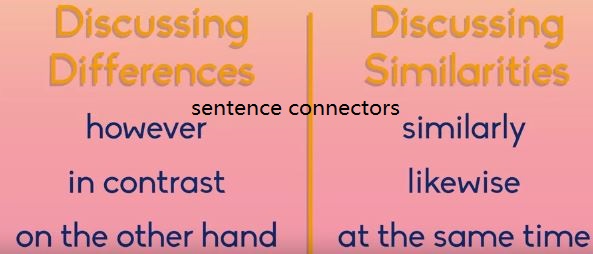
https://www.coursera.org/learn/careerdevelopment/lecture/pnzBE/language-focus-phrases-to-compare-similarities

https://www.coursera.org/learn/careerdevelopment/lecture/x2Pkl/language-focus-phrases-to-contrast-differences

Example: Community colleges and universities are similar because they offer courses in sciences and humanities. The independent clause has a subject, they, and a verb, offer.

When describing experience, many job seekers use a bullet list of three to five lines. There is no punctuation at the end because these are not complete sentences.


Hi Mary, or Hi Mr. Smith to Dear Mr. Smith, Dear Ms. Smith, Dear Sir or Madam 
Bye or Take care or Goodbye to Sincerely or Yours sincerely
I'm, you're (contractions ) to I am, you are

Dear Ms. Smith, I was very interested to read your advertisement for the position of receptionist in the Seattle Herald dated May 6th 2011. I would like to be considered for this job.

Language Focus - Comparative Structures


Amy is always on time. however, her sister is not.  (ok) 
or Amy is always on time; however, her sister is not. (ok) 
You can use a semicolon or a period at the end of the first independent clause. Then, start the next independent clause with a sentence connector. Follow it with a comma, and then the next independent clause.

Subordinating conjunctions:


Amy is always on time while her sister is not. (ok)
While her sister is not, Amy is always on time. (ok)
When the sentence starts with the subordinate clause, use a comma between the two clauses. When the sentence starts with the main clause no comma is needed.

correlative conjunctions


Both Amy and her brother are always on time. (should change to is??)
Neither Amy nor her brother are late for meetings. (should change to is??)
Notice that the verb in the sentence must agree with the second noun in the pair. 


Degree Complements
Comparatives are one type of degree complement. They are Adjectives that compare two or more things. You can use a superlative adjective to talk about the one that is bigger than all of them. Intensifiers: "very, much, even" These are adverbs that make adjectives sound stronger.

If you think that a comparison might surprise or impress your readers, You can add even before the comparison. Even can be used to strengthen verbs or or adjectives. Remember that writers usually use even when they think their reader might be surprised or impressed by an idea.


Order of Adjectives

Friday, May 28, 2021

Grammar: Deduction (lemme) vs. contractions (I've)

Deduction vs. contractions  (I've, apostrophe) 

https://www.coursera.org/learn/media/lecture/HDVMy/language-focus-reductions


                                                   got to                   gotta


One way to do this is by leaving out some of the middle sounds of a phrase, give me  to gimme, common reductions that leave out some middle sounds include lemme, let me, want to, want to, and gonna, going to

Another way to make reductions is by leaving out one of the N sounds of a phrase. are formed by leaving out the V sound in have. could have, should have, would have, musta, and mighta.


Two more common reductions are formed by leaving out a sound at the end of a phrase, kind of and lotta. They are formed from the phrases kind of and a lot of. So you could say, I'm kind of hungry or I'm not, I ate lotta chips earlier.

They are very similar to other words like can't or she's or I've. These words are contractions. A contraction is a word formed by combining other words and leaving out some letters. The missing letters are replaced with an apostrophe, which is a small mark at the top of the line.


Zhang Wei (1) Give me that tire. You (2) should have let me try to fix it yesterday.

Zhang Wei (1) Gimme that tire. You should have let me try to fix it yesterday.


Liu Xiang If (3) you had told me you (4) could have fixed this yesterday, I (5) would have let you.

Liu Xiang If (3) you'd told me you (4) coulda fixed this yesterday, I (5) woulda let you.

Zhang Wei I did tell you. I said, ‘I (6) want to help. Are you (7) going to let me?’ And do you remember what you said?

Zhang Wei I did tell you. I said, ‘I (6) wanna help. Are you (7) gonna let me?’ And do you remember what you said?

Liu Xiang No, I (8) do not.
Liu Xiang No, I (8) don't.

Zhang Wei You said, ‘(9) I have (10) got to do this myself.’ So I (11) did not do anything.
Zhang Wei You said, ‘(9) I've (10) gotta do this myself.’ So I (11) didn't anything.


Elena thinks the price of gasoline is _gonna_ rise soon, so she's buying extra today.

Please tell Ivan that he's _gotta_ hurry or he'll be late.

Call me later if you _wanna_ go to the concert and I'll buy you a ticket.

You're _gonna_ go to the airport right now? _Lemme_ tell you how avoid the afternoon traffic.


I _shoulda_ told you my phone was broken.  I know you _woulda_ let me borrow yours.


Anara says we _hafta_ go now if we _wanna_ catch the last train back to the city.

Sunday, May 23, 2021

English for Media Literacy

Welcome to English for Media Literacy,  a course created by the University of Pennsylvania, and funded by the U.S. Department of State Bureau of Educational and Cultural Affairs, Office of English Language Programs. 

https://www.coursera.org/learn/media

This course is designed for non-native English speakers who are interested in learning more about U.S. media literacy.  In this course, you will explore different types of mass media, such as newspapers, magazines, television, and social media. This course will also give you the opportunity to develop a broader understanding of the role media plays in our lives, while building your vocabulary and giving you the language skills needed to analyze what you read and watch. 

  • The first unit in this course will provide an introduction to media literacy and give you an opportunity to evaluate your own media literacy level. 
  • In unit 2, you will learn how to identify facts versus opinions in the media. 
  • The next unit in the course will focus on the differences between social media and traditional media, while 
  • unit 4 will look at how gender and identity are covered in the media. 
  • In the final unit of the course, you will demonstrate your increased media literacy by through a culminating final project on social media.  

  • Week 1: Introduction to Media Literacy

Our language goals are previewing text, skimming (to get summary) and scanning (scan for particular info)

  • Week 2:  Types of Media: Traditional vs. Social
  • Week 3: Advertising
  • Week 4: Bias in the Media
expressing opinions and connotation versus denotation.
Our content goals are recognizing bias by omission, bias by placement, and bias by spin.
  • Week 5: Diversity and the Media
Week 1  Introduction to Media Literacy
acts like a singular noun.what is media? And media is everywhere. In the past, the word media was considered a plural noun.
Mass media is media that reaches a large number of people.

message saturation 

Previewing is a really great way to prepare yourself to learn something new.We'll preview a text in four steps, looking at the title, the pictures and captions, subheadings, and the first paragraph.


Literacy is the ability to read, understand, analyze, and create with a written language. Someone who has literacy is a literate person. 

A point of view is the way in which a person sees the world.It is based on the person's beliefs and life experiences.A value is something that a person or organization thinks is very important. Values guide the decisions that people make. Values guide the decisions that people make.

It is important to understand who is getting the money and power from sending the messages we receive.Having this information helps us make informed decisions about what information to believe and what opinions we have.


Freedom of the press is the right of the media to print and state their opinions without restrictions from the government.

When we skim, we're going to read only the title, first paragraph, first sentences of other paragraphs and sometimes the last paragraph.

Scanning is reading quickly to find some specific information. 

Week 2   Types of Media: Traditional vs. Social
traditional media is all of the forms of mass media. That have been around since before digital technology became popular. Traditional media includes television, radio, print such as newspapers or magazines, mail, and outdoor messages.

Social Media is the websites and applications, or apps, that allow you to create and share media messages with other people.

user(s) – n. a person or thing that uses something


a point of view is the way a person sees the world. Based on that person's beliefs and life experiences

A cause is an idea or belief that people work to support. Another name for a cause is a movement. Raising awareness means showing your support in public so that other people will learn about the cause and decide to help.A donation is money that you can give to support a cause.

Social medial can be used to support a cause through spreading awareness, collecting donations and organizing volunteers or events.


abbreviation is a shortened form of a word or phrase.

LOL: laughing out loud
SMH  shaking my head.
YOLO: you only live once  (less popular)
FOMO: fear of missing out (more popular)
USA, US for the United States of America.


social media messages have a different format compared to other types of writing. You can tag other people, groups, or ideas, and there is a limit on how much text you can write. Also, in the language of social media, it's popular to use abbreviations.

Information that spreads very quickly through social media is called viral.

Often the information is reliable, but if it isn't reliable and people act on that information there can be serious problems.

Credibility means the ability to trust that something is true.

Tagging is the use of a special link to connect a social media message to other things such as people, or groups, places, or even ideas.

hashtags. These are used to show that the message is related to a group or an idea. A post related to the English language programs at the University of Pennsylvania could include #pennelp


Week 3  Advertising   
 
Advertising is creating messages to tell people about a product or service, and to convince them to buy it. The message that is created about a product for sale is called an advertisement, or ad for short.


In advertising, to target means to aim or direct something towards a certain group of people.An audience is the group of people that are going to buy the product or service being sold.So targeting an audience means finding ways to direct advertisement to a specific group of people.

  • How old is the audience? 
  • Are they mostly male or female? 
  • What interests or hobbies do they have?
  • What do these people need? What media do they use most often?
  • where their audience lives.
  • the values and culture of the people

a value is something that a person or organization thinks is very important.The word culture means the beliefs and customs of a specific group of people, often from the same country.

Appeal means to be very interesting or attractive.

Slogans are meant to stick in people's minds. If people remember the slogan, they will remember the product. 
Nike's slogan is, "Just Do it.". McDonald's slogan was, "I'm lovin' it.". 
Nike's logo is called the swoosh. It looks like a check mark. McDonald's logo is often called the golden arches. It looks like a large yellow m.

advertisers use different features when creating print advertisements. Such features include color choices, certain images, a logo, and a slogan.

Sound effects are noises, other than music or voices, that are used when telling a story or making a point.

advertisements played on the radio or television are called commercials.( 电台或电视播放的)广告
A jingle 短曲 is a short song used in advertising to discuss a product or company.

advertisements are created for two reasons. First, to inform consumers about the product, and second, to try to convince them to buy it.

Because they are trying to sell something, advertisers often include exaggerations or leave out some information.  
 

Week 4 Bias in the Media  

  • Being objective means being fair and based on facts instead of opinions. When we talk about media, a conflict of interest is a situation where there might be biased coverage due to business or political reasons.
  • bias by omission
focus on two types, avoiding coverage of a story and presenting a one-sided story. Coverage of a story means publishing media messages about an event.
  • bias by placement
Bias by placement happens when stories that are important for our daily lives don't receive important placement in media messages. It can also happen when unimportant stories get important placement in media messages. important placement means that something is at the top of a page or at the beginning of a video or radio broadcast. 

The second type of bias by placement that we're going to discuss comes from consuming news as entertainment. Another word for this is sensationalism. Sensationalism means, using news media messages to entertain people, instead of informing them about events that are important to their daily lives. we've talked about two possible sources of bias by placement, the role of editors and sensationalism.  

 In media, an echo chamber is a situation where all the media you consume has that the same point of view.   (my comment: information bubble)
 
  • bias by spin.  
Spin means giving a positive or negative point of view about a subject in order to change the opinion of the audience.  


Week 5 Diversity and the Media
dominant group is the group of people that has the power and status in a society, as well as the minority groups, or the groups of people in society that have less power and opportunity.
Minority groups are often determined by a person's race, culture, or gender. For example, in many countries, women have less power or opportunities than men.


race as a group of people who have similar physical features, such as skin color, or hair color.
ethnicity as a group of people who shares similar physical features and culture. However, some people define ethnicity only in terms of culture. 
culture is the beliefs, customs, arts, language and other aspects of a particular group of people.

Your identity is who you are and how you think about yourself.Your identity is connected to your beliefs, values, race, ethnicity, culture and much more. For example you might identify as a woman or a man or Brazilian or a Muslim. The list goes on and on.

Your goal should be to recognize what is a fact and what is an opinion. With this information, you can make better decisions about how to act in the world. 

Monday, April 26, 2021

ACTFL guideline and 5C

 ACTFL: American Council on the Teaching of Foreign Languages


The ACTFL Proficiency Guidelines are a description of what individuals can do with language in terms of speaking, writing, listening, and reading in real-world situations in a spontaneous and non-rehearsed context. For each skill, these guidelines identify five major levels of proficiency: Distinguished, Superior, Advanced, Intermediate, and Novice. The major levels Advanced, Intermediate, and Novice are subdivided into High, Mid, and Low sublevels. The levels of the ACTFL Guidelines describe the continuum of proficiency from that of the highly articulate, well-educated language user to a level of little or no functional ability.


Standards for Foreign Language Learning in the 21st Century

WORLD-READINESS STANDARDS FOR LEARNING LANGUAGES
The five “C” goal areas (Communication, Cultures, Connections, Comparisons, and Communities)
Level: Novice, Intermediate, Advanced, and Superior