In the beginner's mind there are many possibilities, but in the expert's there are few. - Zen master Shunryo Suzuki
Monday, May 31, 2021
Grammar
Grammar: Transitions
Transitions are words that connect different ideas in your writing and speech, like a bridge connects one city to another. A transition gives the reader a bridge from one of your ideas to the next. Some examples of transitions include also, therefore, furthermore, on the contrary, finally, next.
to add
Transitions in this category connect ideas that are similar. Such transitions include additionally, in addition, also, and furthermore.
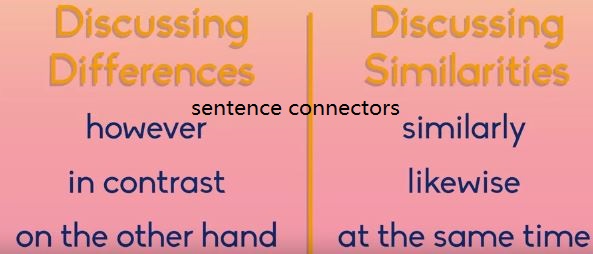
to contrast
on the other hand, in contrast, although, and conversely.
to show cause and effect
therefore, consequently and as a result.
Source: https://www.coursera.org/learn/media/lecture/JOZjV/language-focus-transitions
Grammar: Using Negatives (not, no, never, hardly ever)
Kang has worn glasses, and Kang wears glasses. And add negatives that tell how often.
These negatives, never or hardly ever, go right in front of the verb.
Kang has never worn glasses,
Kang has hardly ever worn glasses.
Kang never wears glasses
Kang hardly ever wears glasses.
Saturday, May 29, 2021
Grammar: Connotation vs. Denotation
Denotation means the basic definition of a word that you'd find in a dictionary. Both denotation and dictionary begin with the letter D which may help you remember this concept. Think of denotation as what you're saying with a particular word choice.
Connotation means the feelings that we have about a word. These feelings are usually positive or negative. Another way to think of this is how we're saying something instead of simply what we're saying.
Cheap has a negative connotation. It gives the feeling of poor quality. If I tell my friend Alberta that I bought a cheap gift to her party, she might be unhappy.
Inexpensive on the other hand, has a neutral kind of connotation. This means it's not positive or negative, it's in between. If I tell Alberta that I brought an inexpensive gift to her party, she shouldn't be unhappy at all.
We noticed an excessive hike in the price of smartphone plans. hike(价格、花费等的)大幅度提高
We noticed a slight increase in the price of smartphone plans.
https://www.coursera.org/learn/media/lecture/4P4kl/language-focus-connotation-vs-denotation
Grammar: Modal verb
Modals (should, must, could, might)
A verb is a word that tells an action or state of being in a sentence. Run, walk, think and be are all verbs. Now we can define modal. A modal is a special type of verb usually used with another verb that describes ideas such as, possibility or advice.
Modals that express possibility do not all have the same strength or express the same chance that something is going to happen. For example, "will" is the modal that expresses the most possibility. If you say "It will rain" then you're saying there's a 100 percent chance. On the other hand, the modal "could" express is only a small possibility. Saying "It could rain" means that there is just a small chance of rain. Modals of possibility include in order from most to least possibility: will, must, might, may, can, and could.
The second type of modal we'll discuss is for advice. Like with the modals of possibility, not all of these modals have the same strength. For instance, "must" is the modal that expresses the strongest advice. If you say "You must mail the letter today" then you're saying that the situation is very important. Mailing the letter tomorrow is not okay. However, if you use the modal "could" to give advice, like in the sentence "You could mail the letter today" then you're giving less serious advice. It's okay to mail the letter today or tomorrow. Modals that express advice include, in order from strongest to weakest: must, had better, ought to, should and could.
Min Soo is hungry, we change the verb ''is'' to its base form ''be''. That means we don't say, "Min Soo may is hungry."
Choose the Correct Modal
Valeria said I ______ look out my window because something special was happening in the street.
can
should (***)
will
Omar thinks that if elephants are too heavy, they ________ eat less junk food
ought to (***)
may
will
Perawit is certain that he ______ win the basketball game.
will(***)
should
may
He sent an email to his teammates saying that they ______ achieve victory. He had no doubts at all.
could
must (***)
might
Before Angela left home this morning, her mother said that she ______ bring an umbrella because it ______ rain.
had better...could (***)
may...will
can...could
Angela agreed that it ______ rain. But she didn’t want to carry an umbrella because there was just a 50% chance of rain.
must
might (***)
had better
Angela’s mother said, “My advice is that you ______ do what you want. If you want to get wet, I will support your decision.”
might
will
should (***)
Grammar: intensifier
intensifier
Almost all of the time, an intensifier comes before an adjective. Think about the examples we just said, very came before excited and really came before smart.
However, the word enough is an intensifier that follows an irregular form. The intensifier enough comes after the adjective. For example, we might say he is strong enough to carry the heavy box or she's old enough to drive a car.
intensifier: very, really or extremely, incredibly, exceptionally, particularly, unusually and amazingly.
Strong adjectives include words like enormous, tiny, amazing, and awful. Enormous means very big, tiny means very small, amazing means very good and awful means very bad. These words have the intensifier very in their definition already. Therefore, you must be careful to not use very as an intensifier as well. Instead, you should choose another intensifier such as absolutely, extremely, particularly and really.
Summary: Intensifiers are words that make adjectives stronger. Intensifiers usually come before an adjective, except in the case of the word enough which comes after the adjective (My feet have grown and the shoes are not big enough). Strong adjectives have the word very in the definition. Therefore, be careful not to use the intensifier very with those words.
I cannot wear my favorite shoes anymore. My feet have grown and the shoes are not big ______________.
particularly
enough (***)
both answers are correct
My uncle is ________________ funny. When my sister and I visit him, we don’t stop laughing.
very
really
both answers are correct (***)
After traveling for a year, I was ________________ excited to see my family.
both answers are correct (***)
incredibly
extremely
The movie we watched last night was ________________ fantastic.
very
absolutely (***)
both answers are correct
Intensifier Use
Which of the following is a strong adjective?
angry
enormous (***)
smart
excited
Which intensifier does not go with strong adjectives?
totally
completely
really
very (***)
True or False: Intensifiers usually come before an adjective.
True (***)
False
Which intensifier comes after the adjective?
very
enough
extremely (***)
really
Choose the correct sentence:
The food we ate at the new restaurant was very amazing.
The food we ate at the new restaurant was really amazing.(***)
Friday, May 28, 2021
Grammar: Deduction (lemme) vs. contractions (I've)
Deduction vs. contractions (I've, apostrophe)
https://www.coursera.org/learn/media/lecture/HDVMy/language-focus-reductions