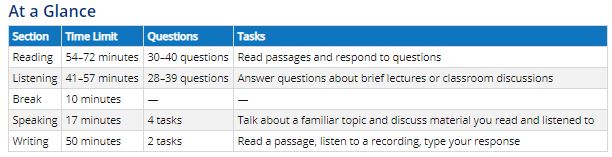
#1: TOEFL Reading Tips
It's time to start your preparations for the Reading Section of the iBT exam. After all, careful preparation is an essential part of a successful TOEFL reading strategy. Here, we are going to look at some general tips that can help you do better in the iBT Reading Section.
Tip #1: Read...a lot
This might sound a little obvious, but one of the best ways to prepare for the Reading test is to read!
As you prepare for the exam, the most effective TOEFL Reading tip is to devote time daily to actively read similar types of texts to those you might see on the test day (mostly academic).
As you read, take note of the vocabulary and expressions that are unfamiliar to you, and make sure that you have a clear understanding of the main points. By reading a little every day, you will soon begin to see improvements in how quickly and effectively you can process texts in English.
Another great way to practice for the test is paraphrasing and summarizing the passages you read. Every time you finish reading a text, set aside some time to summarize the passage and check your understanding of the main points. You don’t want to write too many details in your summary but want to retain the gist of the passage. This activity will help you retain the main points and their connection to each other and the whole passage.
Moreover, when you read a passage and try to paraphrase it by using your own words, you won’t be fooled by the test items that use keywords from the passage but are not related to the question.
Tip #2: Manage Your Time
One of the key skills required to pass the Reading section is good time management. For this one, one TOEFL Reading tip is to dedicate about five minutes to each passage in the section, with one minute for each question.
You can work on your time management by reading more frequently to increase the amount of information you can process in one sitting. Additionally, there’s no better training than practice tests themselves. Schedule a few mock Reading tests into your preparation schedule and track how your pace increases. It is a good idea to keep track of your reading speed across all your practices and aim for your speed to increase.
Tip #3: Skim and Scan the Passage
Skimming and scanning are two effective reading strategies that you can use not only in iBT but in almost every context that involves reading. Skimming is reading rapidly to obtain a general overview of the material. You are looking for main points which are often in key sentences such as a paragraph’s first/topic sentence. You come away from skimming by being able to say what the passage is about. Think of buying a book at a bookstore: you look at the title, the author, a description of what the book is about, and some general information to help you decide if you want to buy it or not. Scanning is reading rapidly to locate specific information quickly. It is done by moving your eyes quickly down the page and searching for the particular bit that you are looking for which may be a name, a date or other number, or specific words and phrases. Be clear what you are seeking. Are you looking for a number? A several-word phrase? A proper noun that will be capitalized? Even though you are not reading every word as you scan, since you have clarified the kind of information you are looking for, you are more likely to find that material rapidly. Learning to expand your peripheral vision can help with this approach.
Tip #4: Vocabulary Counts
A great way of improving your reading comprehension skills is by building your vocabulary. As you read in preparation for the test, note down the words you don’t know and make your personal vocabulary list.
TOEFL Reading passages tend to use similar language from one test to another. This means that by practicing with sample tests, you will build your TOEFL vocabulary and reduce the possibility that you will encounter unfamiliar language on test day. As a way of remembering new terms, group the vocabulary you encounter according to their meaning or category of use and make a note of relevant synonyms and antonyms.
For tips and strategies on vocabulary learning, you can go back to Course 1, Module 4 and review the vocabulary learning tips we studied. For a great list of academic vocabulary, follow the link below. It includes more than 300 useful words that can help you understand academic tests more effectively. Ultimate TOEFL Vocabulary List: The 327 Best Words to Know • PrepScholar TOEFL
Tip #5: Use Your Understanding of Essay Organization
We explored the Writing Section of iBT in Course 2, Modules 3 and 4. We learned that your essays need to start with the thesis statement and incllude topic sentences along with supporting sentences and details. This is true for the organization of most standard texts, as well. You can use this knowledge to understand reading passages as an organized and meaningful message and not as a series of sentences with no pattern. When you read, remember to use the following strategies:
- Read the entire passage from its start to its finish.
- Identify the passage’s main ideas.
- What are the supporting details?
- What is the relationship between these two items?
- Identify common organizational patterns you know from articles.
- Connecting words are often a clue to organizational patterns. Pay attention to these.
- Write a text summary after reading, making sure that it incorporates the same pattern of organization as the reading.
- Note that certain connecting words and transitions reflect specific relationships between ideas.
- Steps in or order of a process — first, second, next, finally
- Reasons — since, because
- Consequences— as a result, so, therefore
- Examples — for example, such as
- Relationships— in contrast, on the other hand
- Restating information — in other words, that is
- Conclusions — in conclusion, in summary
- When a text presents two opinions, be sure to mention both opinions in your summary and reflect the correct relationship between them.
- Analyze the relationship between the opinions.
- Focus on how the end of one sentence is related to the beginning of the next.
- State the ideas in a single sentence choosing transition words that best capture the relationship between ideas.
To summarize, in order to be prepared for the Reading section of iBT, you need to devote time to read and improve your speed of reading and vocabulary. As you read, make sure you practice techniques that help you understand the passage effectively and efficiently. Practice skimming, scanning, summarizing, and paraphrasing each time you read. Now, make sure you watch the lecture videos to learn more about reading strategies.
Sources
www.ets.org
www.prepscholar.com
#2: iBT Listening Tips
The Listening Section of the iBT exam measures many different factors such as overall comprehension, purpose, implied meaning, and so on. However, there are other factors that can affect your listening comprehension in general.
1. English Sounds
When you listen to any audio in English, you should be able to correctly hear and recognize the sounds. This may sound too obvious, but sometimes this is challenging in practice. For example, lamp and lamb sound very similar except for the last sound. These sounds may even confuse native speakers. You should work to ensure that you can hear slightly different but definite sounds in English, such as between “d”, and “t”, or “b” and “p” or “l” and “r”, etc.
One way to practice distinguishing sounds in English is through listening and transcribing what you hear. You can listen to a song or the news, pause the audio frequently and simply write down everything you hear. After a while, you will notice that understanding the words and sounds will become easier for you.
2. English Stress and Intonation
You may have heard that “language is music” because of each language's unique sound system. English is one of the most musical languages due to its stress and intonation patterns. Intonation is the use of correct tone of voice and pitch when you speak a language. In some iBT questions, what you hear can have a different meaning depending on the intonation pattern. Therefore, it is key to your listening comprehension to know the tones of 1) important words and 2) sentence transitions. Moreover, if you are used to one form of an English accent such as American or British English, start listening to other accents as well. Afterall, the Listening section includes a variety of native-speaker English accents including from the U.S. and Canada, the U.K., Australia, and New Zealand. This variety will better represent the various accents you might hear while in an English-speaking environment.
3. Paraphrasing and Inferencing
Just like reading, when you listen, you need to be able to understand the concept not by putting words together but by understanding the entire message beyond surface words and structure. While listening to TOEFL audio material as you practice, consider other words the speaker could have used. This practice will benefit you on test day since the correct answer choice often paraphrases the text instead of presenting a direct quotation. Also, the speaker may use a word you do not know. In these cases, be ready to use your guessing skills if you can. Practice paraphrasing in listening in the same way you practice it in reading. This will help you not to focus only on the words and structure you hear, but also pay attention to the meaning that is there.
Build your inference-making skills, as well. This practice involves identifying information you know to form a guess about information that you are not directly given; in other words, “reading between the lines.” You already know how to make an inference while reading by looking for clues in a text and matching these with your own experiences and knowledge. This helps you determine what is not directly written. This is inferring information. The same strategy applies to making an inference while listening. A classic example is that if a speaker mentions that the time is approaching noon, that she did not eat breakfast, and that her stomach is rumbling, you may correctly infer that she is hungry.
4. Understand How to Approach Conversations
The listening that is tested in the TOEFL involves two different speech types: lectures and conversations. The lectures are like what you would hear in a large university course. They are planned, organized and quite formal. Like academic writing in English, they are also most commonly straightforward.
However, like conversations in everyday English, the conversations in the TOEFL test are frequently not so direct. If you become familiar with several aspects of conversational English that can make them a challenge to follow, your listening comprehension and TOEFL score will increase. Let’s look at common conversational-English features that you should recognize and accommodate.
Verbal pauses: Speakers in English conversation use verbal pauses in their speech when they are considering what to say next. You might hear um, er, ah or other sounds that aren’t actual dictionary words. In addition, you might hear actual words such as well, I suppose, let me see, so, now, etc.. These do not correspond to the conversation topic, but give speakers a moment to hold their position in a conversation or to have time to organize what they will say next. Identify the topic of the conversation, follow it as it moves ahead, and be patient with these verbal pauses. They are giving the speaker (and you!) a moment.
Repetition: While we learn not to repeat material when we write in English, conversational language frequently features repetition. People in a conversation are most commonly “speaking in the moment.” They do not have the benefit of editing as they would with something they write. While editing in writing usually removes repeated words or ideas, conversation is a negotiation of meaning that occurs in real time. Ideas are often said more than once.
Interruptions: Conversation styles differ among international cultures and even within one nation’s style of spoken expression. Conversation elements also change depending on whether it is a formal or informal exchange or based on a speaker’s emotions or age, for instance. You may hear a speaker interrupted in a conversation in English or even hear the speaker “self-interrupt” to add information or change the direction of a conversation. The thing to remember is that conversations are frequently fluid, with stops and starts and “bumps” in how messages progress. Once again, consider whether an interruption might be changing the topic or whether it is simply the speaker getting off track before returning to the original thought.
“Talking over:” One kind of challenging interruption to decipher is when both people in a conversation speak at the same time with different information. This is “talking over.” The original speaker might hope to hear an “excuse me” when this happens because “talking over” isn’t generally a polite pattern, but this works out differently depending on when and where it happens. A t.v. debate? An emotional discussion? A conversation with an impatient friend? Any listener may lose important information when you observe “talking over.” Still, keep your attention on the general topic and retain the information you can. The conversation, especially in a TOEFL listening sample, will quickly return to just one person speaking.
Misspeaking: Sometimes speakers unintentionally or unknowingly use a wrong word or phrase. This “misspeaking” can confuse a listener. Official iBT lectures may include misspoken words. However, they are more common in iBT conversation sections since these are more fast-paced and less organized than lectures.
While iBT conversations have fewer of these challenging features than what you hear in actual face-to-face conversations, it is valuable to recognize these features and be flexible and skilled in accommodating them. Your practice will help you with this.
5. Time Management Tips
Budgeting your time is critical while responding to the Listening sections of TOEFL. We know there are five recordings to manage. Also, unlike with the Reading section of TOEFL where you can re-read a passage, you cannot listen again in the Listening section. You will hear a passage once only and have only one opportunity to answer a question. You cannot go back. Answer each question as it appears even if you must guess.
How much time should you budget for each listening response? Let’s do the math. There are 16.5 combined minutes (990 seconds) of TOEFL listening. The combined number of listening questions is 28. 990 seconds/28 questions = 35 seconds per question. Because you will have taken good notes (see below), you probably will use fewer than those 35 seconds per question. In fact, some experts suggest that you take about 10-20 seconds for each question. This way, if you do need a little more time on a few questions, you’ll have it.
6. Note-Taking
Taking good notes while you listen is a central skill to develop before the test. You will need to check your notes made on test day while answering the questions. We’ll review more about this in the strategies-for-note-taking lecture.
What is your goal with note taking? Aim to keep pace with the audio and to filter what material is more and less important. In a way, taking notes is the first step in summarizing. You are concentrating but already making connections with what is being shared and what is important. In the videos, you will learn more tips to help you take notes more effectively.
The second strategy that can help you save even more time is writing consonants only and not the vowels. Here are a few examples sleep, you can just write slp, symptoms smptm and depression, dprs.
Next strategy is using the two-column layout. This is very helpful if you want to organize your notes in this example here you can see the note belongs to a conversation between a professor and a student. This is going to be easy to retrieve information based on who said what.
7. General Tips
ETS.org has a page with some very useful listening strategies that can help you both in iBT and generally as you listen to something in English. Review the material here for excellent suggestions. Improving Your Listening Skills (For Test Takers)
Success with iBT Listening will be much more likely if you follow the tips presented above. You must also know the test format completely. The Listening section has distinct types of passages and questions. If you are familiar with these before test day, your confidence and your score will likely be higher. You will also gain “muscle memory” to be able to concentrate on the material presented, not the “how-to’s” of taking the test. If you haven’t yet taken iBT sample tests, do this several times before test day.
#3: iBT Speaking Tips & Strategies
The iBT Speaking Section is designed to measure many skills such as vocabulary, grammar, pronunciation, task development, and more. Therefore, preparation is key. So, take note of these top tips for TOEFL speaking questions.
Tip #1: Take Notes
It may be a speaking test but note taking is key. As you have learned, only the first task in the speaking section is “independent.” The rest of the tasks require you to read and listen as well. TOEFL lectures are information heavy, so jot down the most important information as you listen. For note-taking strategies, go back to Course 3, Module 2 and review the lecture on note-taking tips.
Tip #2: Prepare a Template
You may not know what question or topic you will be given, but you can plan some aspects of your responses in advance. Prepare a template with useful phrases for introducing your opinion, linking to a second idea, mentioning a contrast, and arriving at a conclusion. To review the templates, go back to Course 2, Module 1 and 2.
Tip #3: Do Not Memorize Sample Answers!!
This should be obvious, but when you work and practice with templates and sample answers, it may feel it is easier to memorize some high score samples. Remember that TOEFL Speaking templates can be useful when you prepare for the test so it is wise to become familiar with the questions, but be extremely careful. Using memorized sentences on the TOEFL exam is considered cheating and your score may be cancelled.
Tip #4: Be Clear
Your goal in this TOEFL section is to speak with a natural, steady pace more closely to that of a native English speaker. This will take dedicated, regular practice that you start and continue well before you take the test. In your practice, monitor that you avoid 1) rushing with your words while speaking and 2) laboring to find the word you want. Either of these errors will lower your score on the test.
Regular practice will dramatically improve your speaking. Daily, choose two or more speaking tasks from TOEFL speaking-sample sites such as TOEFL Speaking - Sample Questions and Answers (2021), jot down points you will include while speaking, then using a timer and recording device, speak confidently as you fill the time. Make friends with the various tasks and enjoy this practice since, like weight training in the gym, it will build your speaking confidence and strength. As you practice, listen to your recording after each speech, and note what you hear. Have you provided examples of the point(s) you are making? Have you included information from both the listening and reading material in integrated tasks? Are you using transitions to lead your listener through your reasoning? Do you limit pauses and hesitations? Have you checked off the other best-speaking-tips that you have studied? Then, practice again.
Tip #5: Get Creative
While the TOEFL may be a test, it’s not a test of absolute truth. Whatever question is thrown at you, remember that you can answer however you like, as long as the details you provide support your choice. So, try to prioritize showing off your English over expressing your real opinion. In other words, if you find agreeing to a side in an agree/disagree question easier, go ahead and make up your answer even though in reality you disagree with that.
Tip #6: Practice Accents and Pronunciation
Remember that the TOEFL tests your English comprehension across accents, often featuring recordings of native speakers with accents from across the UK, Australia, the US and New Zealand. So, as mentioned in the previous modules, it is helpful to engage with media from a variety of English accents.
Regarding your speaking accent, you are not expected to sound like a native speaker. However, you need to speak clearly with correct pronunciation. When you practice speaking, record yourself and check your answers for word stress, sentence stress as well as intonation.
Tip # 7: Show off your Grammar
You should not be limited in your grammar in any way when you speak. Therefore, you should use a combination of longer and shorter sentences. In addition, you should show syntactic variety. This means you should try to use simple, compound, and complex sentences in your independent and integrated speaking responses. For helpful grammar tips click here:
Sentence Types: Simple, Compound, Complex, and Compound-Complex
Tip #8: Focus on Yourself
The TOEFL test can feel a little stressful as you record your answer in a room with other people on test day. Block out the other candidates and close your eyes if it helps you to focus.The key in this kind of practice is being able to feel confident and prepared. If you feel you have prepared yourself for the test, chances are you will be able to control your stress. However, if you feel you have not practiced for the test, you may feel nervous.
Tip #9: Practice with TOEFL Speaking Tests and Samples
The fastest way to learn is to take as many sample tests as possible and to listen to sample answers. Try to listen to high-score sample answers and pay attention to the vocabulary choices, grammar, pronunciation, and overall task development.
Tip #10: General Tips
On the main webpage of ets.org there are some useful tips and strategies that will help you practice speaking in a structured way.
Improving Your Listening Skills (For Test Takers)
The questions that appear in the independent task either ask you about your opinion, your preference, whether you agree or disagree with something, they can be about some general topic or it might be about two opposite or contrasting ideas.


This might sound so obvious, but you need to have good reasons and examples to improve your speaking score and this task. One big mistake that some candidates make is they simply speak with fluency and good vocabulary, but the reasons are not strong enough to support their choice. When you respond to a task like this, you should try to give at least two reasons for your choices, also you need to make sure that these answers are not too general and they are not too big to understand. Also when you use examples, make sure that you make some of them personal related to your own experiences.
Some iBT candidates wonder if they need to have a concluding sentence when they answer task one. Well in the 45 second response, you do not really need to have a formal conclusion, however, if you still have 10 to12 seconds and you're wondering what to add. You can definitely add a summary or concluding sentence at the end instead of just pausing and waiting.
#4: iBT Writing Tips
The Writing Section is the last section in TOEFL iBT. It tests your ability to write in standard academic English. The TOEFL iBT Writing Section has two tasks: an integrated writing and an independent writing.
Tip #1: It’s Key to Keyboard
Practice writing in English using a computer keyboard since TOEFL iBT responses can only be typed. It is critical to have keyboard writing skills for the test if you are going to use your time most wisely. You can check your typing speed at www.typingtest.com. This will tell you if you are fast enough or if you need typing practice. If this website rates your speed as low, you need to devote time to improving your speed. Try taking some online courses that teach you how to type fast using both hands and all the fingers, also known as “touch typing.” One helpful site for improving your typing speed is https://www.typing.academy/
Tip #2: Expand Your Vocabulary Step-by-Step
Tip #3: Practice Organizing Your Writing
In your writing practice, actively include transition or linking words to move between different ideas, compare and contrast points, add information, provide examples, etc. You know linking words including for example, furthermore, for instance, in addition, on the other hand, first, second, to sum up, etc. Open the following link to see a graph of central signal words along with explanations of when to use them, and keep the graph open while you’re doing your important writing practice: GRAMMAR WORKSHEET MORE TRANSITION SIGNALS
Tip #4: Practice Spelling
There is no auto correction available on the iBT test. This means that 1) mistakes will not be underlined in red, and 2) spelling mistakes will not be corrected for you. Therefore, it is up to you to notice any spelling mistakes as you type, correct them immediately, and move on. It is very helpful to practice spelling beforehand and not to spend your precious time in the test trying to remember how to spell a certain word.
Tip #5: Manage Your Time Effectively
Tip #6: Remember Summarizing and Paraphrasing
Tip #7: Use a Variety of Sentence Structures
You may have already been able to show off your grammar in the speaking section. However, the writing tasks require you to use another level of grammatical structures. In these, you need to use a variety of verb tenses, compound and complex sentences, adjective and noun clauses, and so on. Also, transition words play a very important role in presenting your ideas in the most organized way. We will explore this subject in the lecture part of this week's lesson.
Tip #8: Monitor Your Progress
Ask a friend, tutor or teacher to evaluate your practice writings based on TOEFL iBT writing rubrics. For best feedback on your overall accuracy, also take sample tests from ETS which are scored by professional TOEFL iBT raters. Finally, read various high-score essay samples and analyze them to understand the factors that contributed to their high score. What elements can you incorporate into your own writing?
Tip #9: General Tips
There are some wonderful tips and strategies from ETS on the following link. They are great for both writing iBT essays and academic essays in general. Improving Your Writing Skills (For Test Takers)
In the lectures, we will look at some tips and strategies that will help you compose better sentences in your essays.
Sources
www.ets.org
www.i-course.com
www.tstprep.com
www.scholarprep.com
www.toeflibtee.com